

If you’re a contractor trying to figure out what is the best SEO strategy for a local contractor business, start with one hard truth: the searches are already happening, and your competitors are capturing them.
Queries like “plumber near me” draw roughly 450,000 monthly searches nationally, and “electrician near me” pulls around 230,000. Those aggregate volumes vary by market, a dense metro will see far more than a rural county, but the pattern holds everywhere: local search demand for trade services is consistent and significant. Many contractors miss a substantial share of it. Not because local SEO is complicated. Because they start with the wrong thing, typically spending on paid ads before their Google Business Profile is even complete.
At ADK SEO REV, we’ve worked through these exact problems with electricians, plumbers, and HVAC businesses in competitive local markets. The patterns are consistent. A contractor spends money on ads before fixing their Google Business Profile. They build ten service pages without getting a single review. They chase tactics out of order and wonder why nothing sticks. The fixes are the same every time. The sequence is what changes the outcome.
What follows is a prioritized plan for contractors who want to rank in the Local Pack and start generating leads from organic search. Follow it in order. Don’t skip ahead.
What Google Actually Weighs When Ranking Local Contractors
Before any tactics, you need a clear mental model of how Google decides who shows up in the top three local results. According to the Whitespark Local Search Ranking Factors survey, Google Business Profile signals account for roughly 32% of Local Pack ranking weight. Reviews account for around 16 to 20%. On-page signals follow at roughly 15%. Backlinks and citations matter, but they sit lower on the list than most contractors expect.
Proximity is the wildcard. It’s the strongest single factor, and it’s entirely outside your control. Google considers how close your business is to the person searching. You can’t move your shop. So the only rational strategy is to compete aggressively on the signals you can actually influence: your GBP profile, your reviews, your website, and your citations. That’s the game.
Contractors often assume they can’t rank in towns 15 or 20 miles from their address. But as someone who lives 45 minutes away from Albany yet ranks #1 in Albany for local SEO, I can tell you one thing: proximity limits you, but it doesn’t eliminate you. The businesses that consistently appear across a wider service area have stronger GBP profiles, more reviews, and better on-page optimization than their competitors. Proximity is the floor. Your effort determines the ceiling.
Your Google Business Profile Is the First Thing to Fix
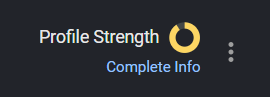
Google Business Profile Optimization Starts with the Right Category
Many contractor GBP profiles are incomplete or outdated, the business name is there, maybe a phone number, and photos that haven’t been refreshed in years. That’s not a competitive profile. A fully optimized GBP is the single highest-leverage action available to most contractors, and it costs nothing but time.
In 2026, your Google Business Profile is THE most important thing for any location-based business.
Start with your primary category. Be specific. An electrical business should select “Electrician,” not “Contractor.” A plumbing company should be “Plumber.” HVAC companies should use “HVAC contractor.” Google uses your primary category to determine which searches your profile is eligible to appear in, so a generic category like “Home Services” gives Google very little to work with. Add secondary categories for specializations you genuinely offer, as some contractor businesses have multiple categories that they might work within.
Then complete your service list with real descriptions, write a business description that uses natural phrases related to your trade, configure your service area accurately, and verify your hours. None of this is optional.
Photos, Posts, and Q&A Drive Active Profile Signals
Yeah…I can feel that eyeroll from here. Trust me, I hate taking the time to write out a social post or even snap a photo to share. But it works!
Photos, posts, and Q&A are where most contractors stop showing up. Google rewards active profiles, and they also reward profiles with 200+ photos uploaded. A realistic cadence: upload real job photos every week (not stock images), publish at least one GBP post per week with a brief update or offer, and answer any Q&A questions that appear on your profile using natural language that reflects what your customers actually ask. These aren’t vanity signals. They’re behavioral signals Google uses to determine whether your listing deserves more visibility. A contractor who does this consistently will outpace a competitor with a stale profile, even in a tight market.
Local Schema for Service Businesses: Removing the Guesswork
Local schema markup ties this together at a technical level. You don’t need to understand JSON-LD in depth, but here’s what it does: it tells Google exactly what you do, where you do it, and how to contact you, in a format a machine can read without guessing. For a service-area contractor without a storefront, the critical property is areaServed, which lets you declare your coverage without requiring a physical address. For individual service pages, Service schema with a provider connection back to your main business entity is the right pattern.
A developer or SEO specialist can typically implement this in a few hours to a day for a standard site, though more complex setups may take longer. It’s not glamorous work, but it removes ambiguity from how Google interprets your site.
Building a Review Pipeline You’ll Actually Maintain
Reviews carry roughly 16 to 20% of Local Pack ranking weight, and most contractors handle them inconsistently, a burst of reviews after a good month, then nothing for six months. That cadence doesn’t build a competitive profile. What does is a simple, repeatable process attached to every completed job.
The three-step version works for most trade businesses. Ask within 48 hours of job completion, when the work is fresh and the customer is satisfied. Send a direct link to your Google review page, not just a verbal prompt. Follow up once, by text, if there’s no response within a few days. Text messages outperform email for most contractor businesses because customers read them faster. Based on patterns we see across client accounts, a typical conversion rate from review request to posted review runs somewhere between 10 and 20%, that range varies, but consistent monthly asks beat a one-time campaign every time. Volume compounds over time.
How Many Reviews Do You Actually Need?
In a small market, roughly 15 to 30 reviews with a 4.7-plus average can put you in strong contention for the top results. Mid-size metros often require 50 to 150. In a highly competitive large metro, you may need 200 or more. The exact number depends on what your competitors have, check their profiles before setting a target. The goal isn’t to “win” reviews. The goal is to make requesting them a standard part of closing out every job, the same way you collect payment. Systems beat willpower. Build the ask into your workflow and it happens automatically.
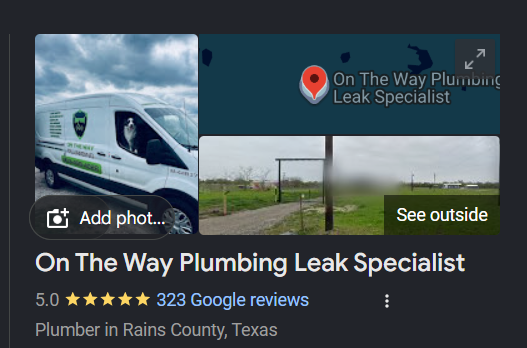
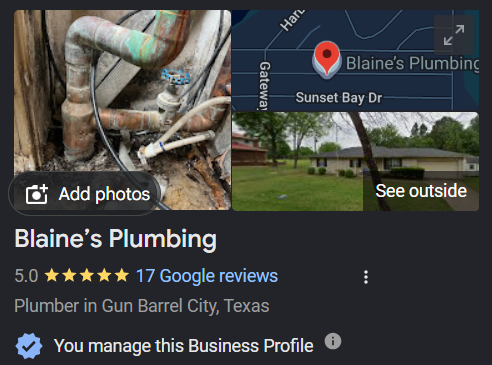
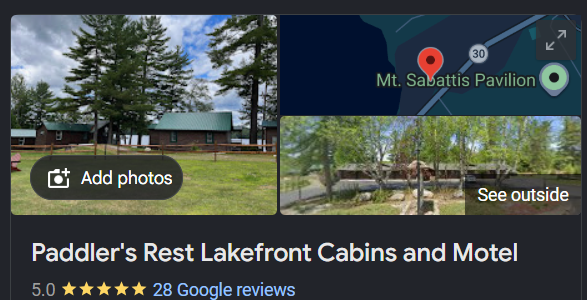
I always tell my clients to REALLY emphasize the importance of reviews to their team and follow-up at the right time after receiving a compliment from a customer or completing a job they were clearly satisfied with. Here are how some of my clients are doing with their reviews:

Dedicated Pages For Services & Service Area on Your Website
This is the bread and butter of your website and SO many local contractors aren’t doing it properly. In fact, they’re being told (by another local agency!) that they should be creating a page for every single service in every single location.
No, that’s not the correct strategy. In fact, Google will likely consider this search manipulation (that’s that ‘backdoor spam’ all the cool kids are talking about!)
The CORRECT strategy, in fact, is to create two pillars on your site: one for all of your Services, and another for all of your service area pages.
The Basic Proper URL Structure for Local Service Business Websites:
- Services
- Service 1
- Service 2
- etc
- Service Area
- Service Area 1
- Service Area 2
- etc
**Bonus points if the services are the exact match for the services listed in your Google Business Profile** Which brings me to my next recommendation:
Citations and NAP Consistency: What Actually Moves the Needle
NAP consistency, your name, address, and phone number listed accurately across the web, helps Google trust your business data. Not all directories carry equal weight, though. For contractor businesses, the platforms that matter most are Google Business Profile, Yelp, BBB, Angi, HomeAdvisor, Houzz, and the major data aggregators: Data Axle, Localeze, and Foursquare. Depending on your trade, niche directories like Porch, Thumbtack, or BuildZoom may also be worth addressing. Building or correcting your listings on the core platforms delivers the majority of the citation benefit available to you. Beyond that, returns diminish fast.
You can definitely go through these sites yourself and manually create your own profiles and fill it out, wait for them to get verified, upload all of the logos and photos to each. (I used to do this for my own business at night while watching TV – it’s mindlessly easy).
But if you don’t want to do that, there are also other relatively cheap tools you can use like BrightLocal or Local Dominator.
Tools like Local Dominator can monitor your citations and provide manual listings for your citation building needs, and cleanup at a cost most contractors can absorb. They’re worth it for the initial audit and cleanup phase, especially if your business has moved or changed phone numbers. An old address still showing on Angi or an inconsistent business name spelling on Yelp creates conflicting signals for Google, and those conflicts can quietly suppress your rankings.
Frame citations correctly in your plan: they’re table stakes, not a growth lever. Get them clean, get them consistent, and move on to higher-impact work. For most established contractors, citation cleanup is a focused one-time project rather than an ongoing monthly priority, though if your business details ever change, you’ll want to revisit. Once the core listings are accurate, that foundation holds.

When to Stop Handling This Yourself
If you’ve optimized your GBP, published service-area pages, collected reviews consistently, and cleaned up your citations, but you’re still not ranking in the top three results for your main service queries, you’ve likely hit a ceiling that DIY effort can’t break through.
Common causes: competitor sites with stronger backlink profiles, technical site issues suppressing rankings, or service-area pages that look fine on the surface but have underlying problems only a proper audit will surface. At that point, continuing to guess often costs more in lost leads than a specialist’s fees.
A good contractor local SEO specialist doesn’t repeat what you’ve already done. They audit what’s working, identify the specific bottleneck, and prioritize the fixes that will move rankings fastest. ADK SEO REV works specifically with contractor businesses, electricians, plumbers, HVAC companies, and general contractors who are generating some leads but want consistent, scalable results from local search. The work is handled by one experienced person, not passed off to a junior team. The plan is built around your market, not a generic template. If you want to know where your business stands and what’s holding it back, reach out and ask about our contractor SEO audits.
So what’s the best SEO strategy for a local contractor business?
It’s not one tactic, it’s a sequence. GBP first. Service-area pages second. Reviews third. Citations fourth. Advanced tactics, backlink building, schema implementation, technical audits, come after the foundation is solid.
Contractors who follow this sequence consistently outperform competitors who spend on ads without fixing what’s underneath.
The searches are happening right now. Someone in your market just typed “electrician near me” or “roofing contractor in [your city]” and landed on a competitor’s page. Whether they find you next month depends on the work you do this week. If you want an honest assessment of where your contractor business stands in local search, get in touch with Bobby at ADK SEO REV. I’ll tell you exactly what’s wrong and what to fix first.